Atelier Serein occupies the rear third of a disused tram depot where the windows are too tall, the radiators are ornamental and every sound travels. Shortly before noon, the loudest thing in the room is a box of pins hitting the concrete floor.
Nobody looks up except Celeste Crag.
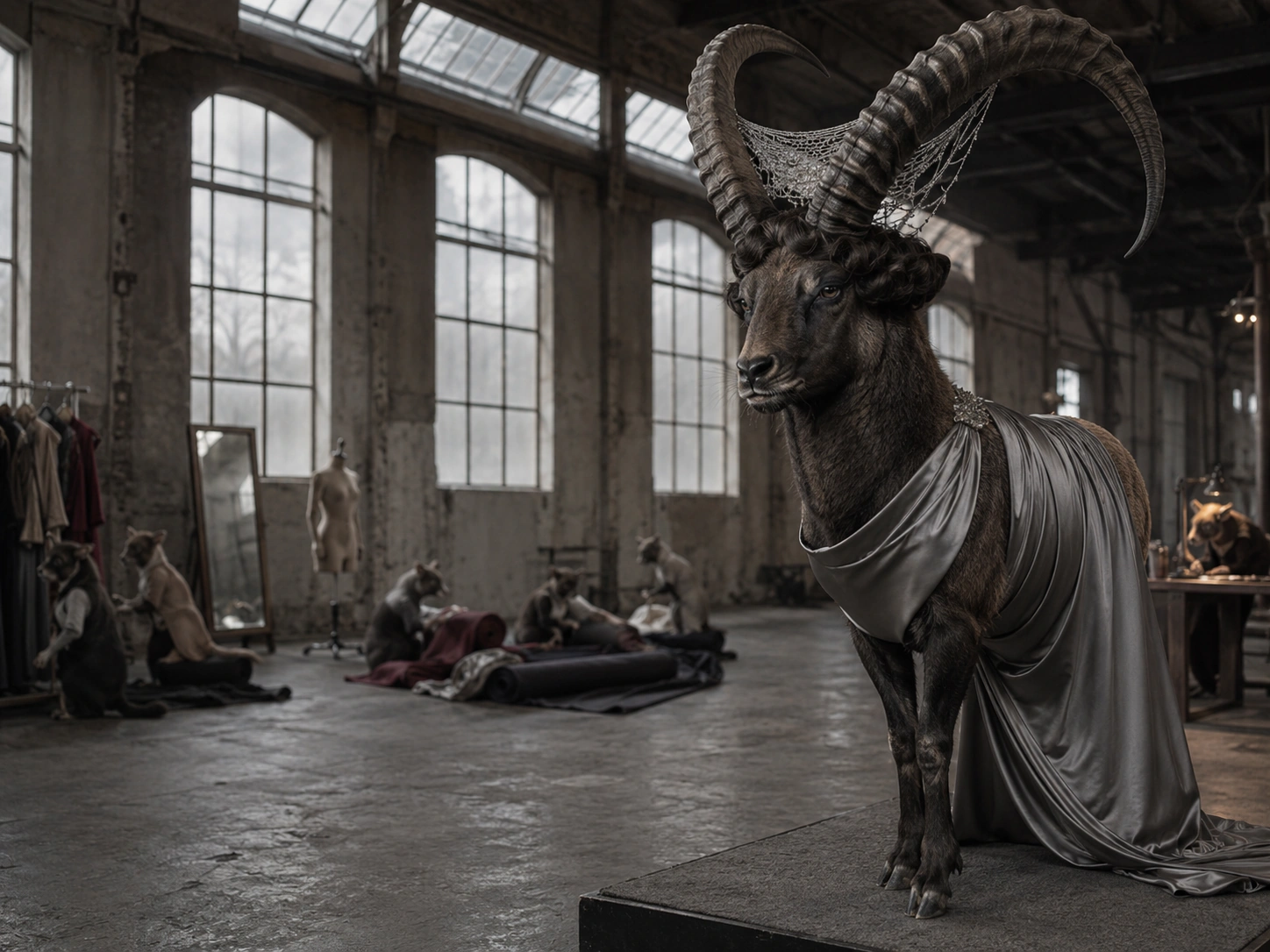
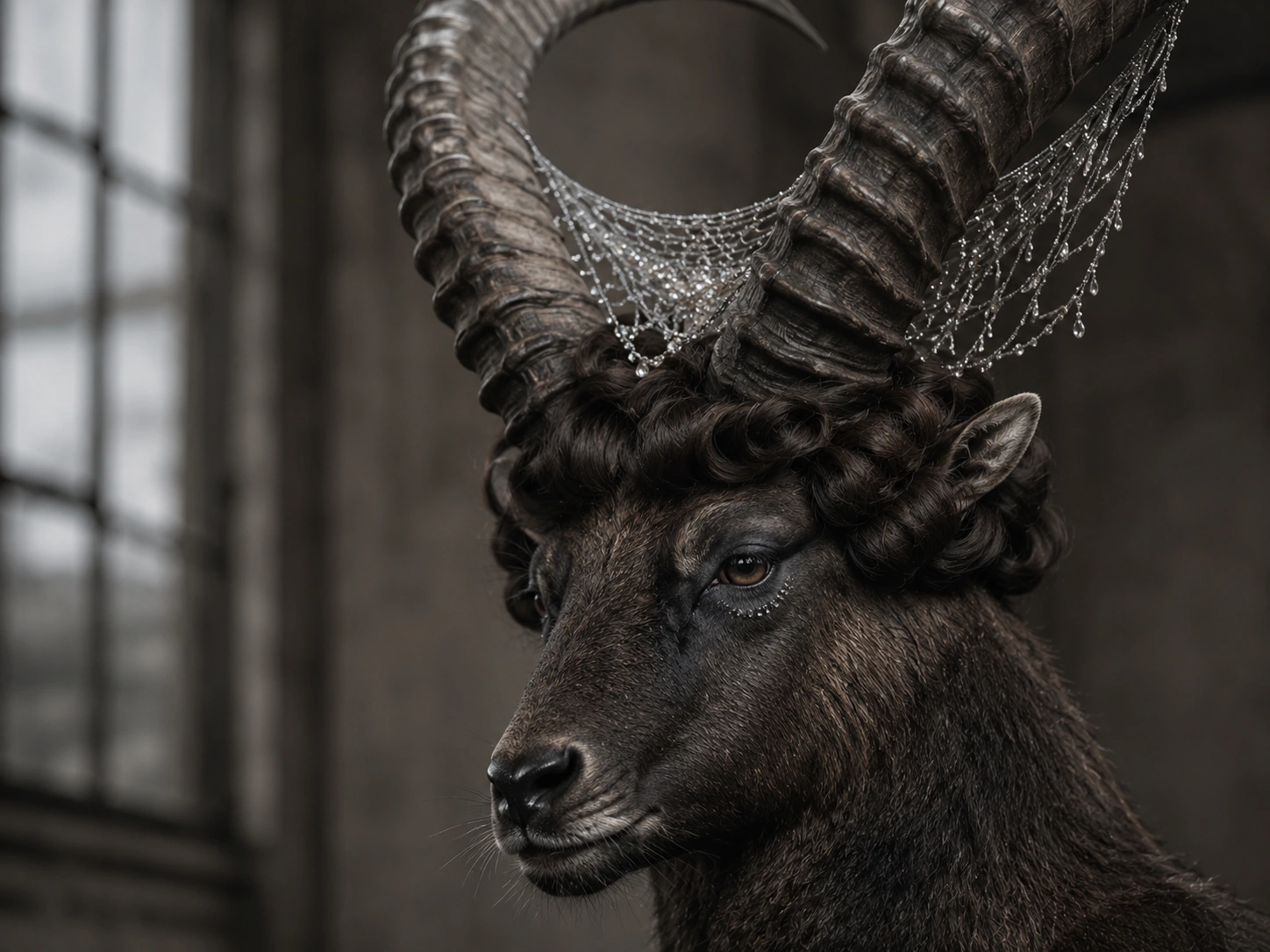
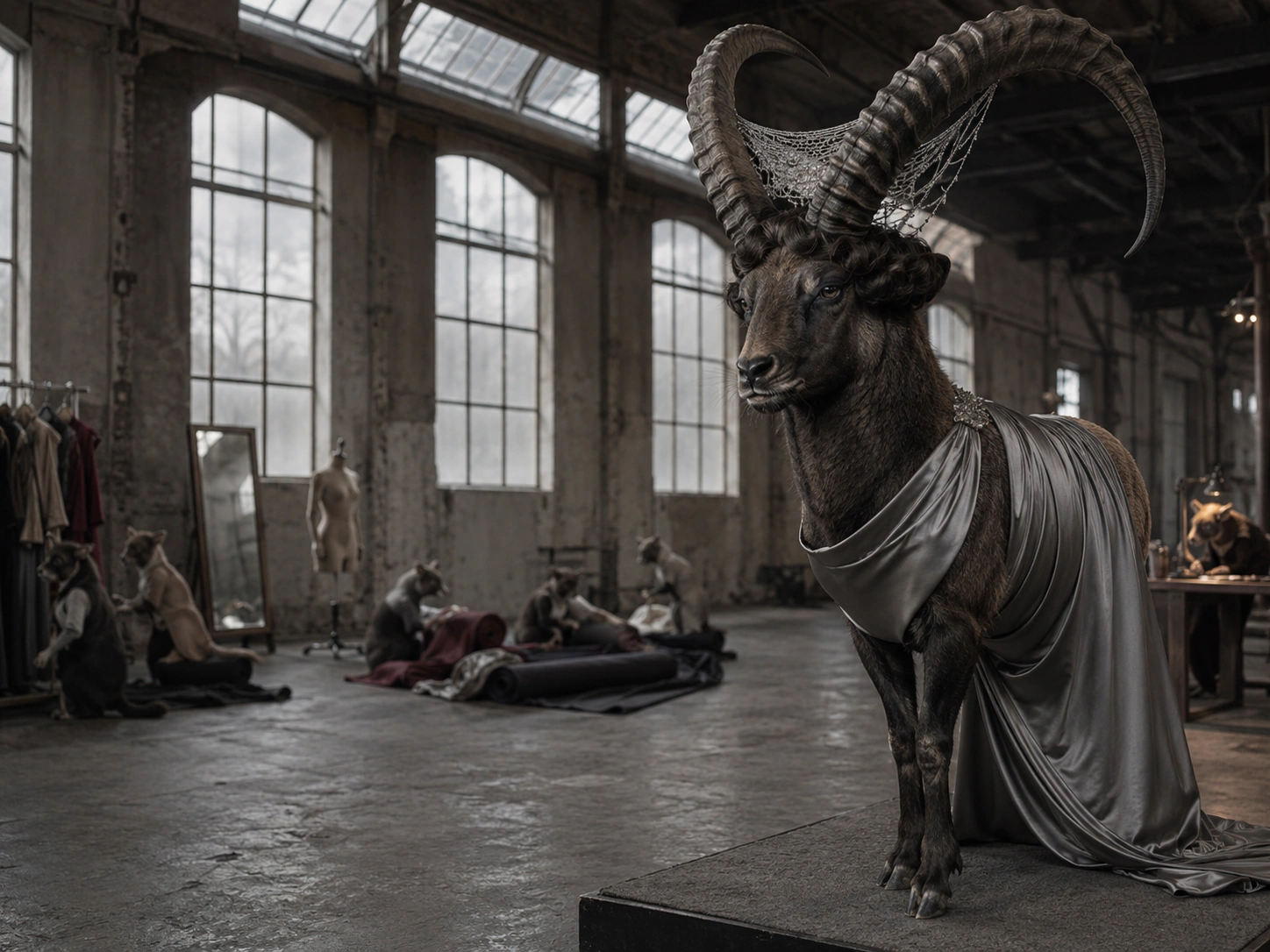
The Alpine ibex is standing on a low fitting platform in six metres of smoke-grey silk, her front legs planted with the wary patience of somebody who has already been asked to turn around fourteen times. Above her eyes sits an espresso-coloured marcel-wave wig, moulded close to the skull before separating neatly around the base of her horns. The horns themselves rise through a fine crystal net fixed beneath the hairline. Nothing is pretending they are not there.
This is the final fitting for Atelier Serein’s first runway collection, due to be shown on Thursday evening in the depot’s former inspection hall. There are six looks, all made for Celeste, and the room has reached the stage of preparation when calm becomes slightly theatrical.
A bad shoulder seam has been removed from look four. The lining of look two has been opened again. Someone is steaming an oxblood cape with the concentration of a surgeon.
Creative director Orla Stoat stands five metres away and asks Celeste to walk.
Celeste does.
The grey dress barely moves.
“That’s wrong,” Orla says.
Celeste stops. “Good. I was worried you liked it.”
Dressing the animal in front of you
Serein’s collection began with a practical problem. Celeste’s horns alter the proportion of almost everything placed near her neck and shoulders.
Standard collars disappeared. Large earrings collided with the curve of the horn. Structured shoulders created what Orla describes as “an extremely expensive traffic jam”.
The solution was subtraction.
Across the six looks, necklines sit lower, fastening points move towards the spine and jewellery is concentrated beneath the jaw. The most elaborate dress has no decoration above the shoulder at all. Its drama happens lower down, where small pewter beads gather densely over the ribs before thinning towards the flank.
Celeste’s drag has developed alongside the clothes.
Make-up artist Fen Mole has given her a narrow charcoal eye extending horizontally from the natural shape of the lid, with a dull silver pigment pressed sparingly beneath it. Her muzzle remains almost bare except for careful grooming and a trace of cool-toned gloss. The effect is less transformation than concentration.
The wig is more complicated.
Celeste usually performs in enormous hair — bouffants, tall brushed crowns, one memorable arrangement involving three auburn rolls and a lacquered feather. Serein’s clothes required something closer to the head.
Wigmaker Saskia Finch built a compact marcel wave in humanely sourced fibre over a flexible mesh base. Small openings allow the horns to pass cleanly through the structure without the hair appearing cut away around them.
“The first version looked apologetic,” Celeste says, studying herself in a freestanding mirror. “I don’t want hair that apologises to my horns.”
The current version does not.
Look three is brought over.
It consists of a narrow black satin column under a sleeveless coat made from strips of lacquered organza. On the rail it resembles a piece of damaged architecture. On Celeste it becomes surprisingly quiet.
A seamstress, Dita Shrew, adjusts one panel by less than a centimetre.
“There,” she says.
Nobody else can see the difference.
Dita can.
Clothes that survive walking
The fitting moves to the inspection hall after lunch. Here the depot floor stretches uninterrupted beneath frosted skylights and old metal beams. Thursday’s audience will sit on low benches along one wall, leaving most of the room empty.
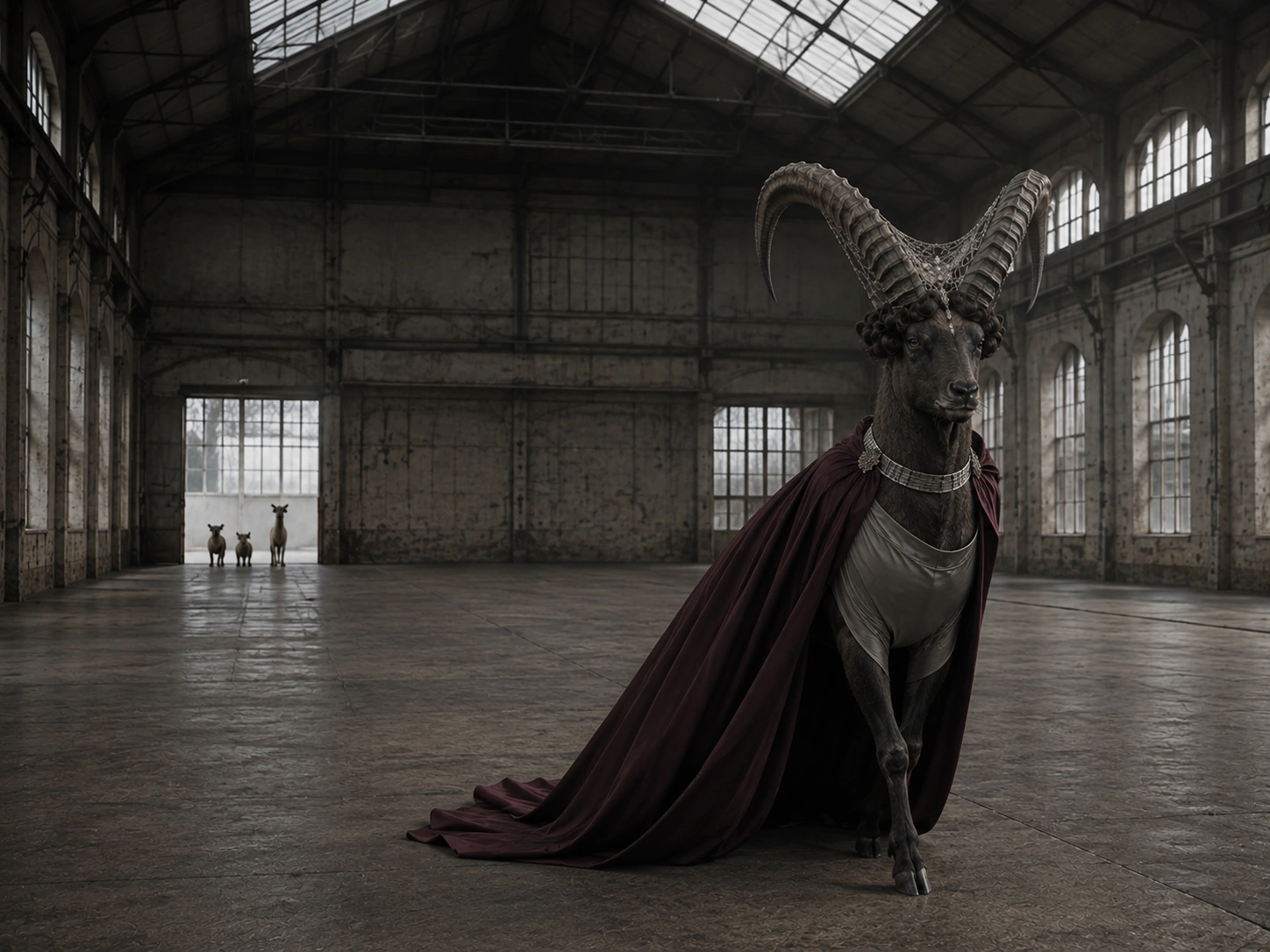
Celeste changes into the final look: a long oxblood cape over a pale oyster-coloured silk body piece, with a narrow hammered-silver collar suspended below the jaw.
The cape has been troublesome.
Its first version dragged between Celeste’s hind legs. The second lifted too easily when she moved. For the third, the atelier inserted tiny glass weights into the lower edge and redistributed the fabric around the shoulders.
Celeste walks the length of the hall.
This time the cape follows rather than competes.
Orla watches without speaking. Several members of the workroom have drifted into the doorway. Celeste reaches the end, turns naturally and begins walking back.
The silhouette is severe from a distance: dark red fabric, pale body, two black horns cutting upward through the low sculpted wig. Closer, the small irregularities become visible. One side of the cape falls slightly differently because Celeste carries her weight unevenly. The crystal net around her horns catches only fragments of daylight. The silk has begun to crease where she moves.
Serein has wisely left all three alone.
After thirty-two fittings, the clothes have stopped looking as though they were designed around an abstract body. They belong to this one.
Celeste returns to the platform and waits while the team checks the fastening beneath her chest.
“What will you be thinking about on Thursday?” I ask.
She considers this.
“The turn,” she says. “I always think about the turn.”
Not the audience?
“No. They can think about themselves.”
The fitting ends at 4:36 p.m. Orla removes one pin from the oxblood cape and puts it between her lips while examining the hem.
The workroom starts packing garments into long unmarked covers. Celeste remains dressed for another minute, facing the tall depot windows in full make-up and a wig built meticulously around the anatomy everyone else spent weeks learning to follow.
Then somebody produces a bowl of sliced pears.
The glamour concludes efficiently.