Profiles / interview
Sharkira Banks in the Quiet Hours
The reef's most photographed face on beauty, privacy and learning to stop moving.
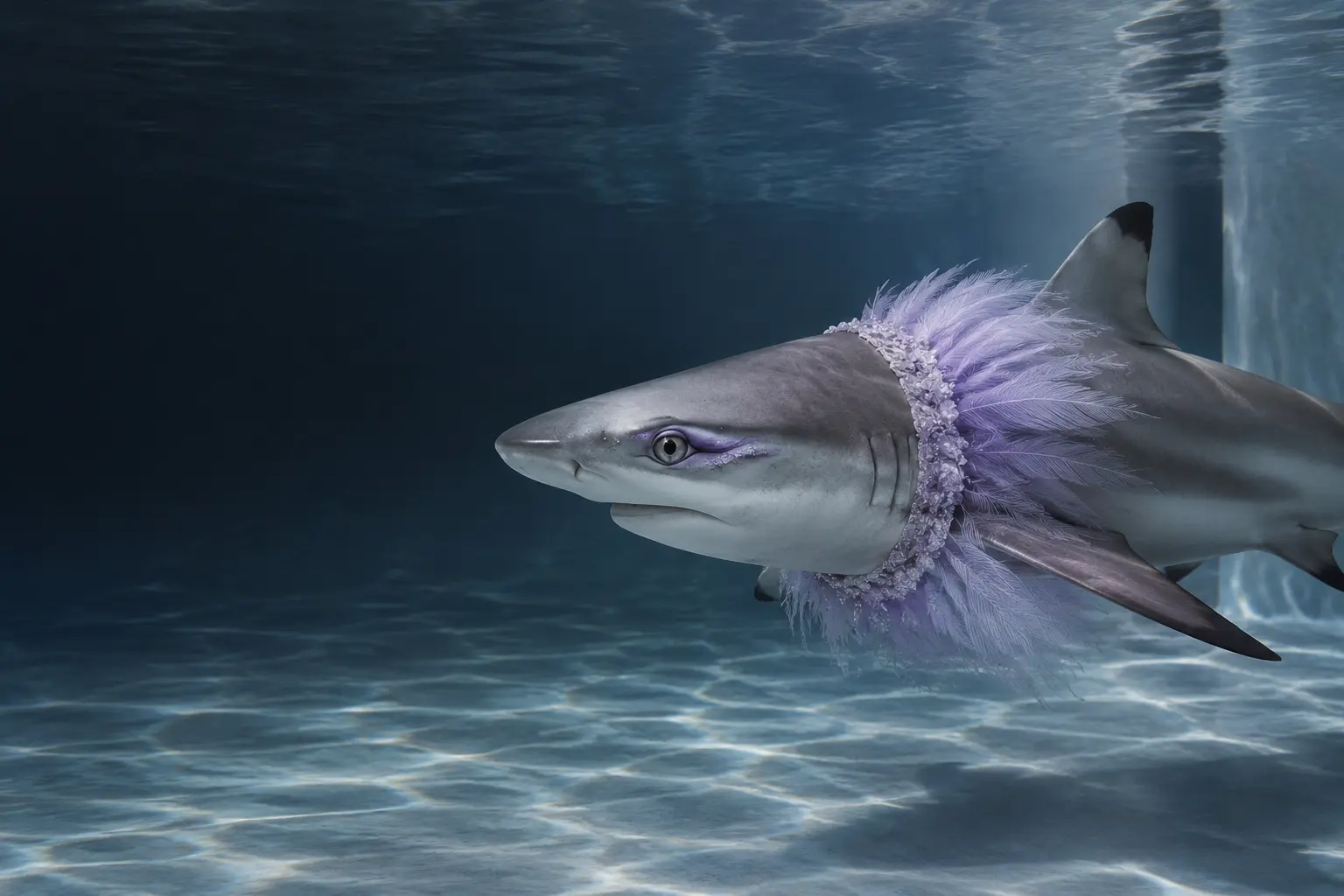
Sharkira Banks arrives without an entourage. This is news in itself. For twelve years, the shark has been photographed entering rooms already full of people waiting to photograph her entering them. Today there is one assistant, one glass of cold kelp tea and no announcement.
The collar is lavender, architectural and surprisingly quiet underwater. Its crystals catch light only when she turns. She does not turn often.
Fame is a current. You can use it to get somewhere.
The problem with being visible
“Fame is a current,” she says. “You can use it to get somewhere. You can also spend your whole life being moved by it.”
Banks speaks with the precision of someone who has watched every careless sentence become a headline. She is warm without performing warmth. When the photographer asks for one more pass, she swims the length of the pool and returns to exactly the same mark.
Her new show is smaller than the arena work that made her famous. Six performances, no screens, an audience of two hundred. The costumes were designed to move with water rather than against it. There are no quick changes.
A face after midnight
The discussion turns to beauty. Banks is suspicious of transformation narratives. She likes preparation: the private hour before the face becomes public, the small discipline of a line drawn correctly, the relief of removing it later.
“Makeup lets me decide where the looking begins,” she says. Then she smiles, which changes the entire temperature of the room.
By noon the collar is back in its case. Banks leaves through a service corridor and is gone before the hotel staff realise she was there.
Continue reading
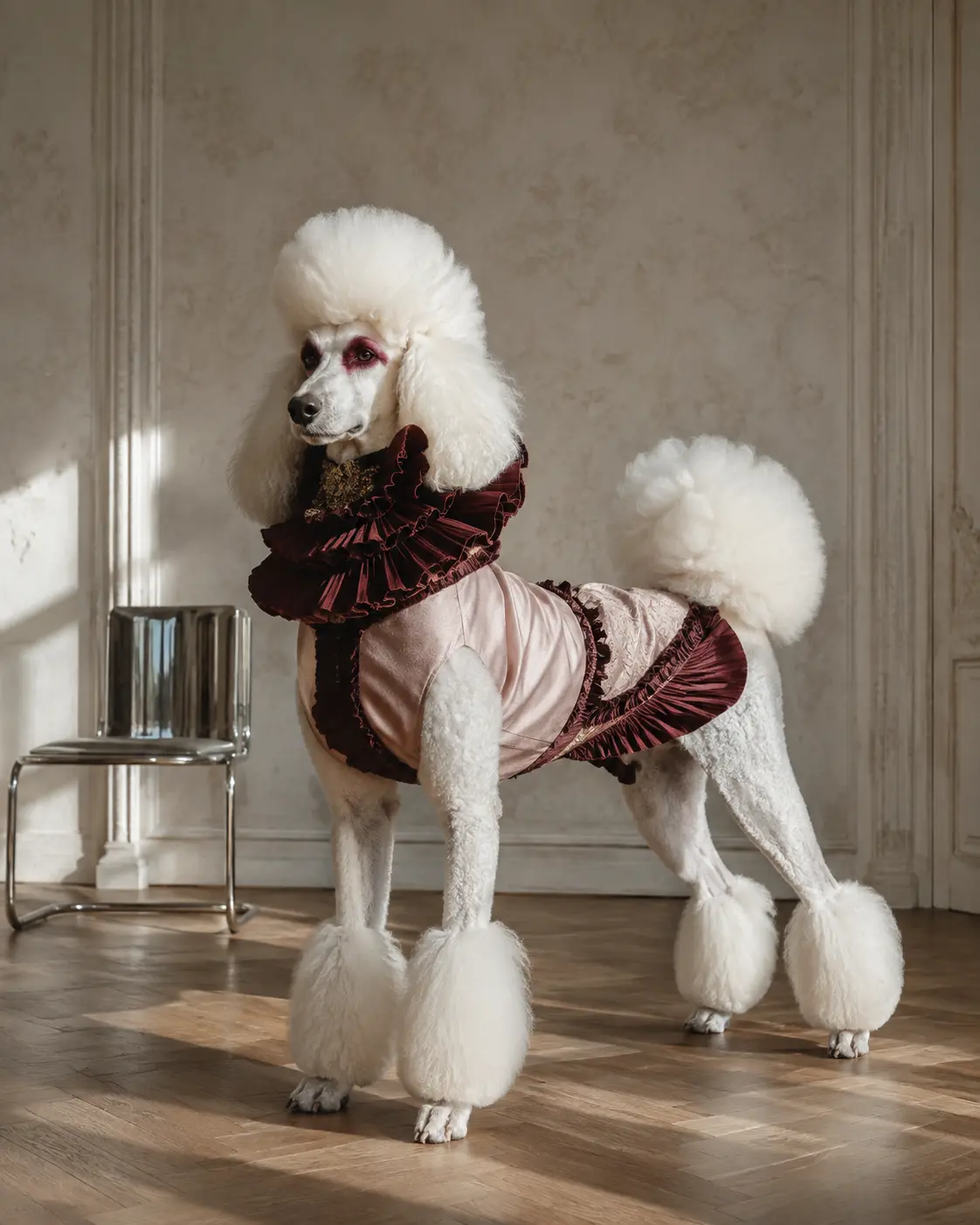 Photography by Agnes Eel
Paris Poodle Refuses the Final Look
One fitting, eleven metres of oxblood silk, and a very public disagreement about restraint.
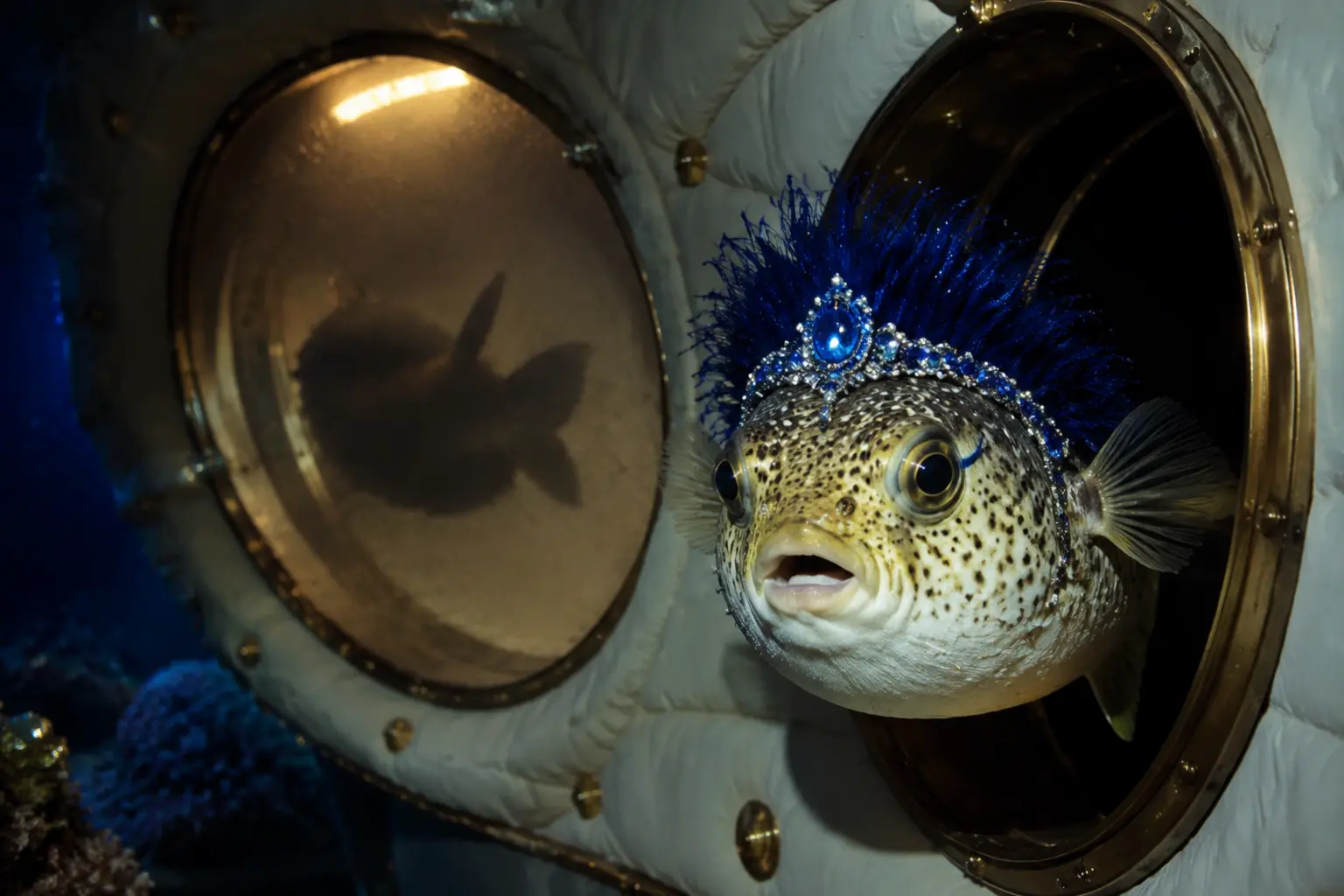 Photography by The Night Current
Puff Daddy Deluxe Leaves the Private Sub at 02:13
The headpiece was unmistakable. The companion behind the glass was less cooperative.